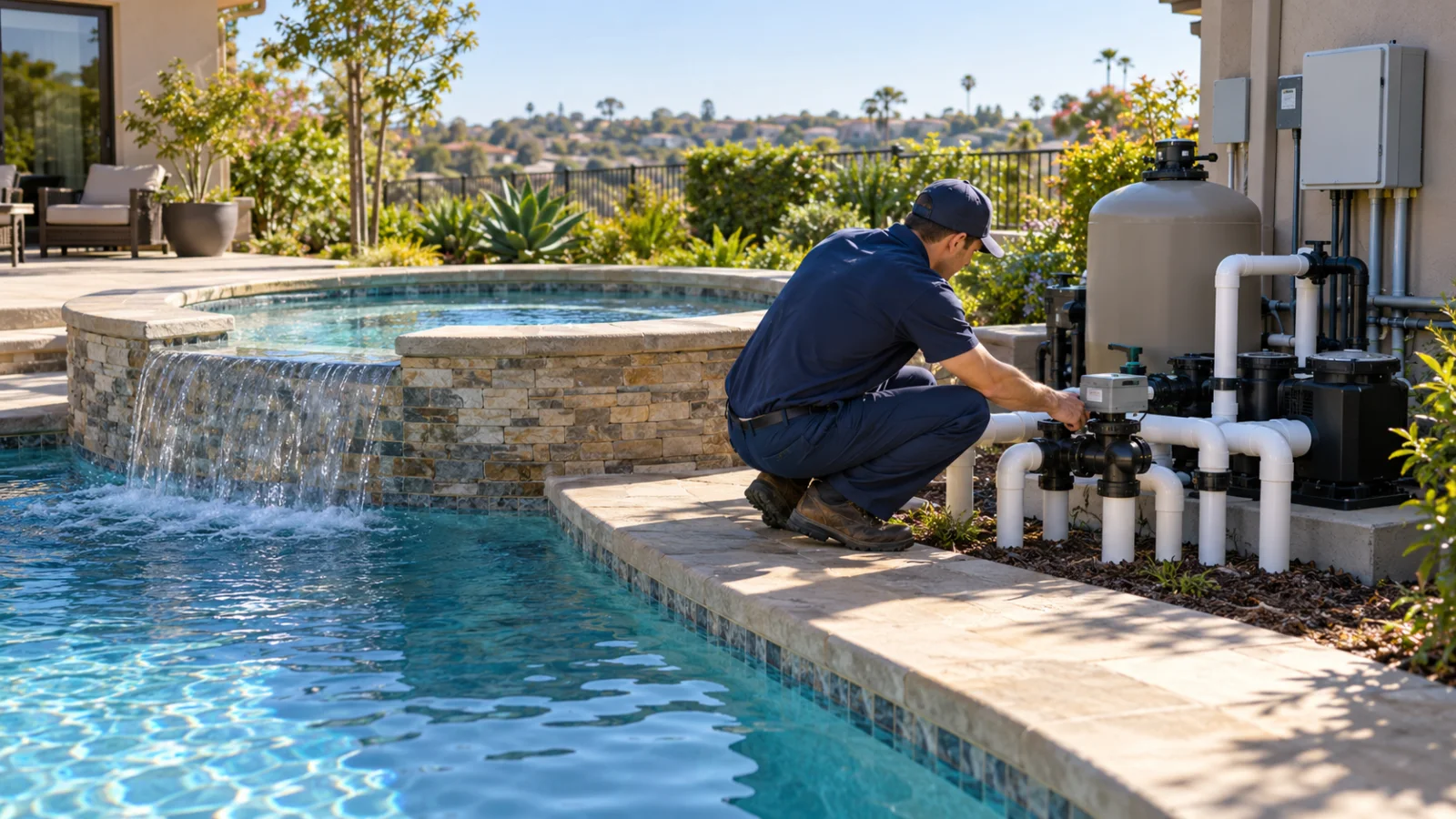
A spillover spa can stop heating even while its pool still circulates. Pool and spa repair on an attached system starts by finding what changes when the controls switch modes.
That means looking beyond the spa basin. The problem may sit at the shared equipment pad, along the water path, or near the connection between both bodies of water.
When the spa shares the pool pad
An attached spa is part of the pool system, not simply a hot tub placed nearby. Its visible clues include a shared deck, connected water, a raised spillway, or controls that offer separate pool and spa modes.
That distinction shapes the repair. A symptom inside the spa may begin somewhere on the shared pad. The pro needs to see what the equipment does in each commanded mode.
Pentair’s EasyTouch documentation gives one model-specific example. Its controls include Pool, Spa, Fill, and Drain valve positions. The guide directs installers to confirm that actuators move water in the correct direction for each position. Pentair’s IntelliValve guide also explains that an automation system moves the valve diverter.
Those details don’t describe every San Diego installation. They do show why an attached spa diagnosis includes three separate questions:
- Which mode has the system been told to run?
- Did each controlled valve actually move?
- Did the resulting water direction match that command?
A controller display can indicate spa mode while a valve remains elsewhere. A valve can also move without proving that the complete water path is correct. The specialist must compare the command, physical movement, and behavior at the pool and spa.
Share every symptom when requesting pool and spa repair service. Mention whether the pool still circulates, whether the spillway changes, and what happens after selecting spa mode. Photos of the pad and control display can also clarify which system needs attention.
Jets, heat, and valves that fail on attached spas
Weak jets, missing heat, and an unusual spillover can appear together. That doesn’t prove they share one failed part. It does make the system’s operating mode important.
Start with observations, not disassembly. Note which mode was selected and what changed. Watch whether the spillover continues, stops, or reverses. Record any message shown by the installed controller. Tell the pro whether the symptom affects every spa outlet or only one area.
Don’t force a stuck valve or remove covers from energized equipment. Controls, actuators, heaters, and pumps can place mechanical and electrical issues close together. Diagnosis belongs with a qualified specialist who can inspect the installed system safely.
Heat complaints also need context. “The spillover spa isn’t heating” could mean the water never gets directed as expected. It could also involve equipment that needs its own assessment. The symptom alone can’t identify the failed component.
If any equipment is wet or standing near pooled water, keep your distance. FEMA says not to touch wet electrical equipment or touch equipment while standing in water. Power should be turned off only when that can be done safely. Ready.gov advises having wet appliances and the electrical system checked by qualified professionals before power is restored.
For a dry pad, gather the controller message and equipment labels. Don’t clear settings repeatedly before the visit. Preserving the symptom can help the matched pro compare the control command with actual valve movement and water direction.
Standalone hot tubs versus a spillover spa
A freestanding hot tub and an attached spillover spa may produce similar complaints. Both may have weak jets, cold water, or a water-level change. Their layouts still call for different service conversations.
An attached spa usually reveals its connection through the property itself. It may share the pool’s deck, spillway, controls, or equipment area. Selecting pool and spa modes from one controller is another useful clue.
A standalone unit is typically identifiable as a separate cabinet with its own model labels and access panels. If that describes your setup, start with our guide to standalone spa and hot tub repair. You can also request a match through our spa and hot tub service page.
Don’t guess when the layout isn’t clear. Send photos showing the entire spa, its relationship to the pool, the control panel, and the equipment pad. The correct referral depends on the actual system, not the word “spa” alone.
This distinction matters across San Diego County. Attached spas appear with several pool layouts, including raised spillovers and pool-level designs. What matters for diagnosis is the connection you can document at your property.
Avoid opening a cabinet or control enclosure just to identify the system. Exterior labels and wide photos are more useful starting points. Include the symptom and the exact action that triggers it. For example, say that the spillover continues after spa mode is selected. That description gives the specialist a testable operating condition without pretending to diagnose the cause remotely.
What a pool pro checks first
The first visit should establish how the system behaves before parts are blamed. For a shared pool and spa, a pro may begin by comparing pool mode with spa mode.
The inspection can follow a clear sequence:
- Confirm the selected operating mode.
- Observe whether the related valve actuators move.
- Check whether water travels in the expected direction.
- Compare circulation at the pool and attached spa.
- Review the heating complaint while the system is in the relevant mode.
- Inspect the accessible pad and plumbing for visible conditions.
This sequence reflects the control logic documented for Pentair EasyTouch and IntelliValve equipment. It isn’t a universal repair script. Other brands and older manual systems may operate differently, so the installed labels and documentation matter.
Tell the pro about recent changes. Mention a controller replacement, plumbing work, a power interruption, or settings changed before the symptom began. These details are observations, not proof of a cause.
Also describe what still works. A pool that circulates while the spa doesn’t provides different information than a system that won’t operate in either mode. The same applies when the spa circulates but won’t hold its expected water level.
Before approving work, ask who will perform it and request the contractor’s license information. California’s general exemption under Business and Professions Code section 7048 applies only when the aggregate contract price is under $1,000, the work is casual or minor, and no building permit is required. Anyone advertising as a contractor loses that exemption at any price. Confirm current license details through the official CSLB license lookup.
Repair versus a larger plumbing job
Some attached-spa problems stay near an accessible control, valve, or equipment pad. Others point toward plumbing that can’t be assessed fully from the pad. The visible symptom doesn’t establish which situation you have.
A focused repair makes sense when the specialist can identify an accessible fault and explain how it produced the observed behavior. Ask for the diagnosis in plain language. The explanation should connect the selected mode, valve response, and water movement.
A larger plumbing conversation may follow when the water path itself needs further investigation. Before authorizing broader work, ask what evidence supports it. Also ask which surfaces need access, what testing comes first, and whether the proposed scope affects the pool, spa, or both.
Keep water-discharge rules in mind if testing or repair requires removing water. The City of San Diego’s pool, spa, and fountain fact sheet says pollutants and construction materials must stay out of the storm-drain system. It describes landscape and sanitary-sewer options only under stated conditions and approval requirements. Don’t improvise by sending pool or spa water into the street. Confirm the current rule and approved route for your address.
The quote should identify the actual scope after the pro discusses or assesses the system. Refresh Pool Pros doesn’t publish a price list for this work because pad access, installed equipment, diagnosis, and plumbing scope differ.
If the proposal becomes a home improvement contract, California limits the downpayment to $1,000 or 10 percent of the contract amount, whichever is less. Confirm the contractor’s identity and license before signing.
When to call us
Call when spa mode doesn’t change the water path, the spillover behaves differently, or the attached spa won’t circulate or heat as expected. A licensed local pool specialist can inspect the shared controls, valves, equipment, and accessible plumbing.
Call us at (858) 400-4598 and we’ll connect you with a licensed local pool specialist.
Frequently asked questions
Why does my attached spa heat while the pool stays cold?
A shared system may direct water differently in pool and spa modes. A licensed local pool specialist can inspect the controls, valve movement, water direction, and heating equipment.
Why does my spillover spa drain when the equipment stops?
The symptom may involve the shared water path, a valve, an actuator, or another plumbing condition. A pool pro needs to observe the system before identifying the cause.
Is an attached spa repaired like a standalone hot tub?
Not always. An attached spa may share controls, valves, plumbing, and equipment with the pool. A standalone hot tub usually needs a specialist familiar with its labeled cabinet system.
How can I check a pool and spa repair contractor?
Ask who will perform the work, request the contractor's license information, and confirm it through the California Contractors State License Board's official lookup.
Need professional help in San Diego County?
Refresh Pool Pros connects you with a licensed specialist for any service in this post.