A pool that holds its level while idle but drops during circulation gives you a useful clue. It doesn’t prove a return-line failure, but it helps a pool specialist decide where testing should begin.
The important detail is the pattern. Record what changes when the pump starts, rather than guessing which buried pipe has failed.
Why pump-on water loss points toward the return side
The return side carries water from the equipment back into the pool. It includes exposed equipment connections, return plumbing, wall fittings, and any feature supplied during circulation.
When water loss increases only during pump operation, those active sections move higher on the testing list. A small opening may behave differently while water moves through that section. The same area may show little visible loss after circulation stops.
That pattern isn’t a diagnosis. A pool return line leak is only one possible cause. The water could also be escaping near exposed plumbing, a fitting, a valve, or an operating feature. Water may travel through soil or along a buried pipe, so the wet area isn’t always beside the actual opening.
Shared pool and spa systems add another layer. Some Pentair controls, for example, use commanded Pool, Spa, Fill, and Drain valve positions. Their guidance directs installers to confirm valve movement and water direction. That means a specialist may compare the selected mode with the valves that actually moved. Other control systems can differ.
Pay attention to whether the loss appears during ordinary circulation, spa mode, or a feature cycle. If the pool loses water during only one operating mode, tell the specialist. That observation can narrow the investigation without claiming that one component is already proven defective.
For a broader look at professional methods, see how pool leak detection works.
How to separate a plumbing leak from evaporation
Evaporation doesn’t identify itself by leaving a cracked fitting or wet pipe. The useful approach is a controlled comparison under similar conditions.
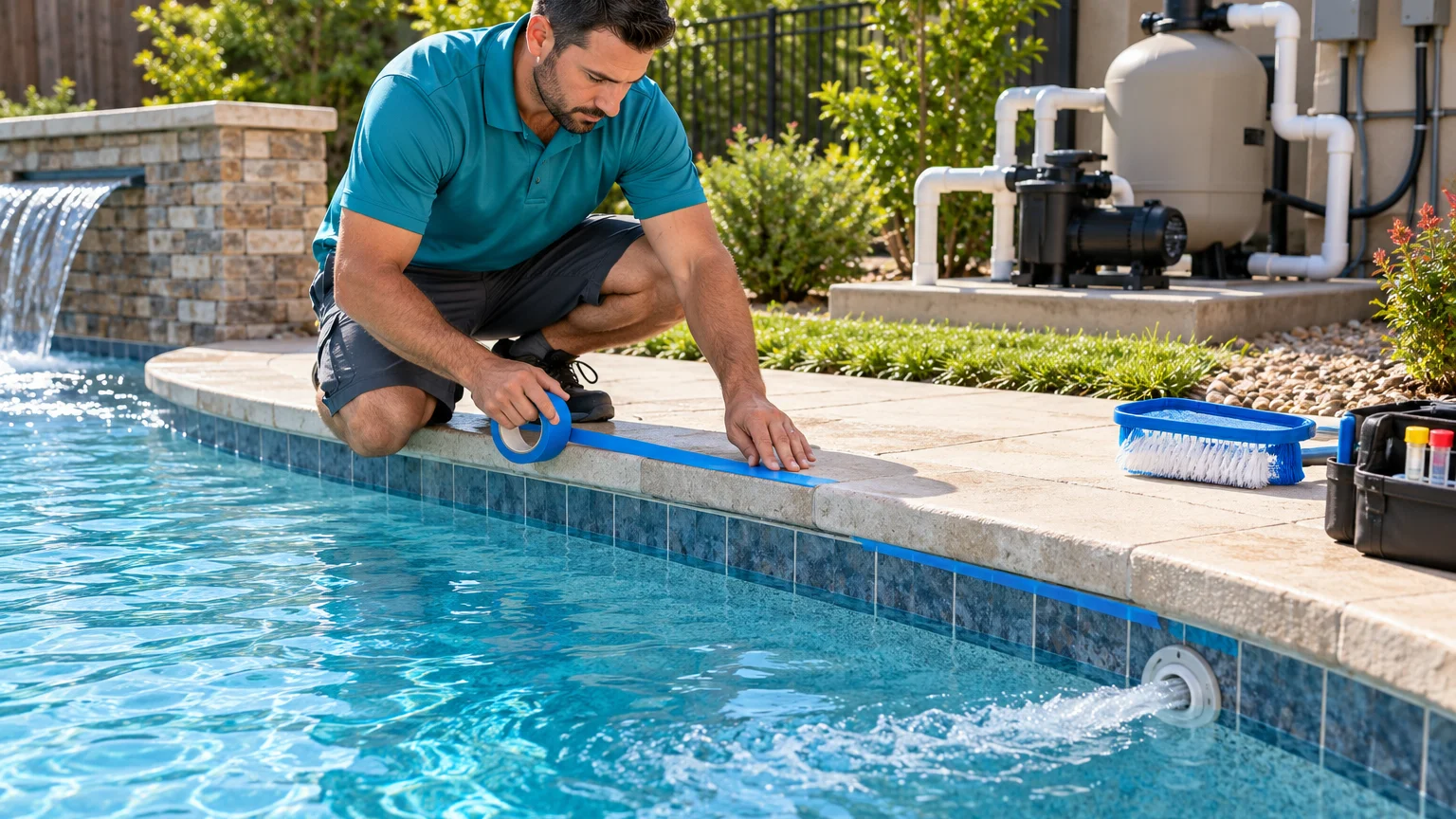
Mark the pool level at a fixed point on the tile or skimmer. Use removable tape or another clear reference that won’t damage the finish. Record the pump schedule and note when you checked the mark.
Keep the comparison periods as similar as practical. Note rain, wind, swimming, water added by hand, and any operating waterfall or spa spillover. San Diego’s coastal and inland properties don’t share identical conditions, so a result from another neighborhood isn’t a reliable baseline for your yard.
Don’t assign a normal weekly loss without current evidence for your pool. No verified San Diego figure confirms one amount that applies across the county. If you’re unsure whether the change reflects weather or a leak, compare the pool with a container of pool water exposed beside it under the same conditions. The comparison doesn’t locate a defect. It only helps show whether the pool and the reference water behaved differently.
An automatic filler can hide the drop by replacing water. Record whether your pool has one and whether you heard or saw it running. Don’t adjust unfamiliar filler equipment solely for this test. A specialist can explain how to account for your installed model.
Our guide to pool leaks versus evaporation in San Diego covers that distinction in more detail.
Return lines, fittings, and water features a pro tests
A specialist usually starts with the parts that can be observed without opening the deck. That includes exposed connections after the pump, equipment fittings, valves, and the routes supplying returns or water features.
The goal is isolation. If several return branches exist, the pro can determine which section deserves focused testing. A wall return may be checked separately from a fountain, spa spillover, or another feature. The exact method depends on the installed plumbing and controls.
Look for moisture while the system runs, but don’t treat one damp patch as proof. Water can move across a sloped equipment pad. It can also follow a pipe underground before appearing at the surface. In San Diego County, pads may sit beside the house, below a raised pool, or behind a retaining wall. Share those layout details because they affect where escaped water might appear.
Also note water leaving through an intended outlet or feature. A feature that sends water outside the pool’s catch area can mimic hidden plumbing loss. Shared pool and spa plumbing can also shift water between vessels when a valve moves. The pro needs to see the operating mode that produces the change.
Don’t loosen fittings, open equipment, plug submerged lines, or excavate a suspected route. The symptom hasn’t identified the failed part yet. Premature digging can expose the wrong section and erase useful clues.
A pool leak detection specialist can test the system and separate an accessible equipment issue from a concealed plumbing problem.
What to record before leak testing begins
A short, consistent log is more useful than a confident guess. Start with the waterline mark and the exact equipment mode running when the level changed.
Record these details:
- When the pump started and stopped
- Where you marked the pool level
- Which return jets or features were operating
- Whether the spa shared circulation with the pool
- Whether an automatic filler added water
- Whether anyone swam during the observation period
- Whether rain or manual filling changed the level
- Where moisture appeared around the pad, deck, or yard
- Whether the loss continued after the pump stopped
Photos can help preserve conditions. Take one straight across the waterline mark. Photograph visible moisture from far enough away to show its location. A close photo of a wet fitting isn’t useful if the specialist can’t tell where it sits in the system.
If the system changes modes automatically, write down what the controller displayed. Don’t assume the valve position matched the label. On documented Pentair systems, installers are told to confirm that actuators move water in the correct direction. A matched pro can check how your installed equipment behaves.
Avoid changing several settings between observations. If the pump schedule, spa mode, filler, and feature settings all change together, the result becomes harder to interpret.
Bring the log to the appointment. It helps the specialist reproduce the symptom and choose the first section to isolate.
What happens after the leaking section is isolated
Isolation narrows the problem from an entire pool system to a specific branch, fitting, feature, or equipment area. The next step is confirming the exact repair location.
That distinction matters with buried plumbing. A test may identify a return branch without revealing the opening’s precise position. The specialist may need additional locating work before discussing deck access or excavation. Don’t drain the pool or open the deck based only on the pump-on pattern.
The repair plan depends on what testing confirms. An exposed connection and a concealed line aren’t the same project. Access, surrounding materials, plumbing layout, and the condition of nearby components can all affect the proposed work. Ask the matched pro to explain what was isolated, how the location was confirmed, and what area must be accessed.
We don’t publish an unsupported fixed price for this repair. The actual service company provides its quote after discussing or assessing the pool. Ask what the quote includes and whether restoration of opened surfaces is part of the proposed scope.
For work covered by California contractor rules, check the contractor through the CSLB license lookup. California’s exemption applies only when the aggregate contract price is less than $1,000, the work is casual and minor, and no building permit is required. Anyone who advertises as a contractor loses the exemption at any price. The threshold took effect January 1, 2026. Splitting a larger project into smaller contracts doesn’t create the exemption.
When to call us
Call when the water level repeatedly drops during pump operation or one equipment mode produces the loss. A licensed local pool pro can isolate the active section before repair work begins.
Call us at (858) 400-4598 and we’ll connect you with a licensed local pool specialist.
Frequently asked questions
Why does my pool lose water only when the pump runs?
The pattern may point toward plumbing, equipment, or a water feature that carries water during circulation. It doesn't prove which part has failed, so a pool specialist must isolate and test each section.
Does pump-on water loss prove that a return line is leaking?
No. A return line is one possibility, but fittings, equipment connections, valves, and operating water features may also deserve testing.
How can I separate a pool leak from evaporation?
Record the pool level under comparable conditions and note pump operation, weather, swimming, water features, rain, and added water. A matched comparison helps a specialist interpret the pattern.
What should I record before pool leak testing?
Note when the pump starts and stops, where you marked the waterline, which features ran, whether water was added, and where you saw moisture.
Should I excavate around a suspected return-line leak?
No. The symptom doesn't locate the failed section. A licensed pool specialist can isolate the plumbing before any repair area is opened.
Need professional help in San Diego County?
Refresh Pool Pros connects you with a licensed specialist for any service in this post.