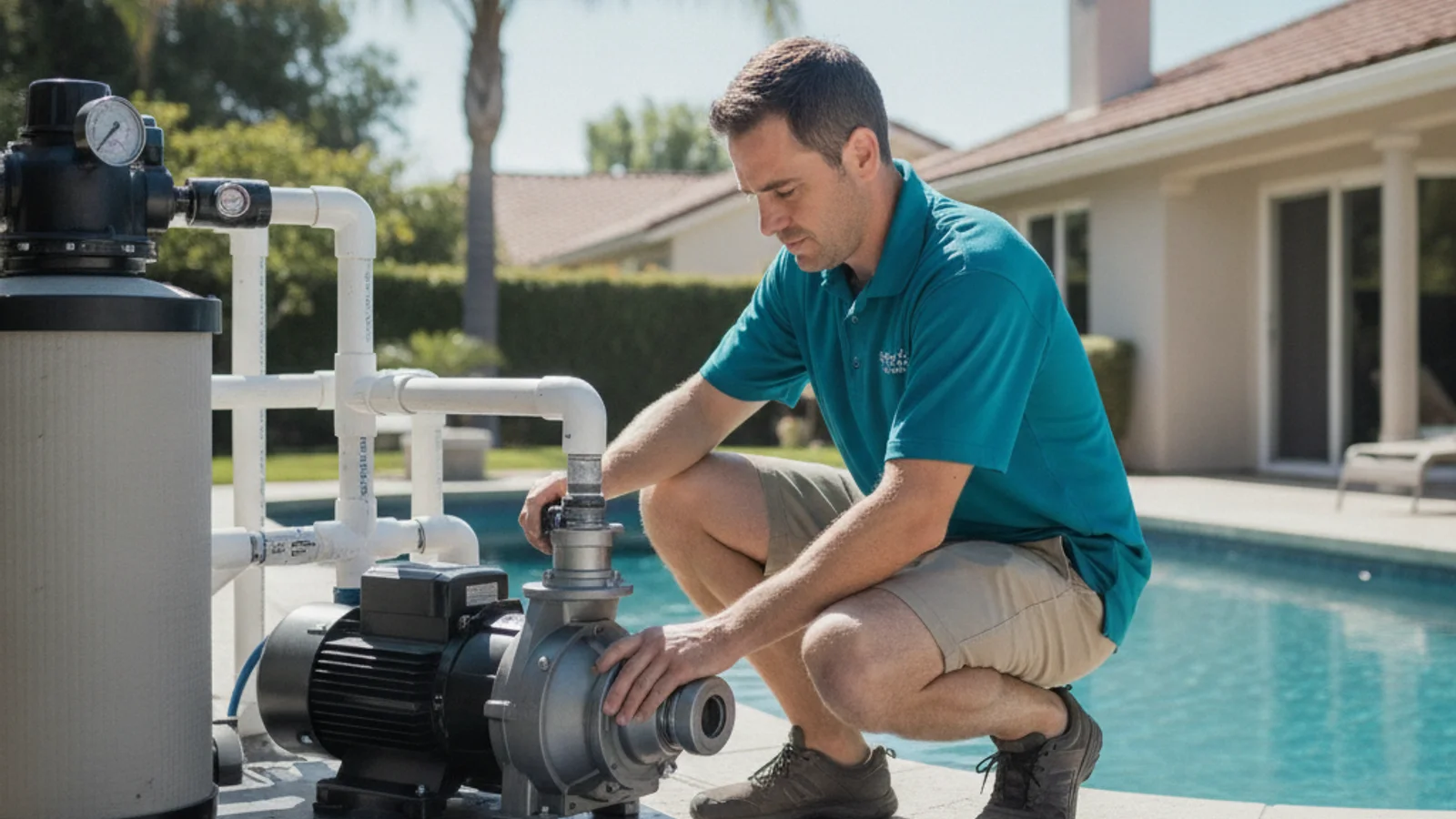
Replacing a pool pump in San Diego costs $600 to $2,200 installed, with most single-family pools landing between $900 and $1,600. The final number depends on whether you choose a single-speed, dual-speed, or variable-speed motor, plus how much rework the plumbing and electrical connections need at the equipment pad.
Refresh Pool Pros connects San Diego homeowners with vetted pool repair specialists who handle pump diagnosis, replacement, and the electrical work that sometimes comes with it. This guide breaks down what actually drives the price so you know what a fair quote looks like before a pro shows up.
How much does a pool pump replacement cost in San Diego?
A straightforward pump swap costs $600 to $900 for a single-speed unit and $1,200 to $2,200 for a variable-speed unit, parts and labor included. Labor alone typically runs $150 to $350 for a like-for-like swap where the new pump bolts onto the existing plumbing and electrical without modification. Jobs that require re-plumbing, a new sub-panel, or moving the pump housing to meet current setback code push toward the top of that range or beyond it.
What’s the difference in cost between single-speed and variable-speed pumps?
A single-speed pool pump costs $250 to $500 for the unit itself, while a variable-speed pump runs $700 to $1,500 before labor. The variable-speed motor uses a permanent magnet design that can throttle down to a fraction of full power, which is why it costs more upfront but uses far less electricity over a season. Many California jurisdictions, including parts of San Diego County, now require variable-speed pumps on new pool construction and major equipment replacements, so it’s worth asking a repair specialist whether your project falls under that rule before you buy a single-speed unit.
Why does pool pump replacement cost vary so much across San Diego?
Cost varies because of horsepower needs, plumbing age, and access to the equipment pad, not just the brand of pump. A 1960s pool in La Mesa or El Cajon often has undersized or corroded PVC that needs partial replacement when the old pump comes off, adding $100 to $400 in extra labor. A newer pool in Rancho Bernardo or Carmel Valley with modern plumbing usually swaps in under two hours. Coastal properties in La Jolla, Coronado, and Pacific Beach also see more corrosion on motor housings and unions from salt air, which can mean replacing fittings the inland pools don’t need touched.
Should I repair my pool pump or replace it?
Repair makes sense when the pump is under five years old and the failure is a worn seal, capacitor, or bearing, which typically costs $150 to $450 to fix. Replacement makes more sense once the motor is humming but not spinning, the housing is cracked, or the pump is past the eight-year mark, since a second repair on an aging unit often fails again within a year. A licensed pool repair pro in the Refresh Pool Pros network can diagnose the specific failure and tell you honestly which option actually saves money.
What are the warning signs a San Diego pool pump needs replacing?
The clearest signs are a pump that won’t prime, water leaking from the seal plate, a motor that runs hot to the touch, or a noticeable jump in your SDG&E bill without a change in run time. A pump that cycles on and off on its own, or one that’s noticeably louder than it used to be, is usually telling you the bearings are going. Catching these signs early avoids a full system failure that can also damage the filter or heater if the pump stops circulating water properly.
Does San Diego’s water and climate affect pump lifespan?
Yes, in two different ways depending on where you live. Coastal air within a few miles of the ocean corrodes pump housings, unions, and electrical connections faster, which is common in beach communities like Pacific Beach, Ocean Beach, and Coronado. Inland heat in areas like Santee, El Cajon, and Escondido pushes pumps to run harder during long summer stretches, which stresses bearings and seals over time. Both patterns tend to shorten the 8 to 12 year average lifespan that a shaded, low-corrosion yard would otherwise get.
Do I need an electrician or permit for a San Diego pool pump replacement?
A like-for-like swap onto existing wiring doesn’t require a permit in most San Diego jurisdictions. If your new pump needs a dedicated circuit, a larger breaker, or the equipment pad has to move to meet setback requirements, the job needs an electrical permit that a licensed pro pulls before starting work. Pool equipment replacement often overlaps with electrical work, so it’s worth confirming licensing and permit handling before hiring anyone for the job.
How do I choose the right pump size for my pool?
The right horsepower depends on your pool’s total volume, plumbing pipe diameter, and how many features (like a spa jet or waterfall) run off the same pump, not the size of the pool alone. A specialist calculates turnover rate, the time it takes to circulate the full volume of water once, and sizes the motor to hit that target without overworking the plumbing. Guessing based on the old pump’s horsepower label can leave you with a unit that’s undersized for a newly added spa or oversized in a way that wastes energy every month.
Refresh Pool Pros connects San Diego homeowners with vetted pool repair specialists and pool equipment technicians who diagnose the failure first and quote honestly on repair versus replacement. If your pump is tied into an older system, our network also includes pros who handle pool leak detection and salt water conversion, since a failing pump sometimes surfaces alongside other equipment issues. Homeowners in San Diego and across the county can get matched with a specialist who’s already familiar with local plumbing eras and code requirements.
Frequently asked questions
How much does it cost to replace a pool pump in San Diego?
Most San Diego homeowners pay $600 to $2,200 for a full pool pump replacement, parts and labor included. A single-speed pump lands on the low end, a variable-speed pump on the high end, and the spread mostly comes down to horsepower and how much the old plumbing needs to be reworked to fit the new unit.
Is it cheaper to repair a pool pump or replace it?
A repair usually runs $150 to $450 and makes sense if the pump is under five years old and the motor housing is intact. Once a pump is leaking from the seal plate, humming without spinning, or older than eight years, replacement is almost always the better long-term value because you’re not paying labor twice.
How long does a pool pump last in San Diego?
A well-maintained pump typically lasts 8 to 12 years in San Diego. Coastal salt air corrodes motor housings faster within a few miles of the water, while inland heat in El Cajon and Santee stresses bearings and seals, so both ends of the county tend to see shorter lifespans than a pump running in a shaded, low-corrosion yard.
Do I need a permit to replace a pool pump in San Diego?
No permit is required to swap a pump like-for-like in most San Diego jurisdictions. If the replacement involves new electrical circuits, a sub-panel, or moving the equipment pad, the city or county will require an electrical permit, which a licensed pool repair pro pulls as part of the job.
Are variable-speed pool pumps worth the extra cost in San Diego?
Yes, for most homeowners running a pump 6+ hours a day. Variable-speed pumps cost more upfront but cut energy use by 50 to 70 percent compared to single-speed models, and San Diego’s SDG&E rates make that difference show up fast on the power bill, often paying back the price gap within two to three years.
What size pool pump do I need for my San Diego pool?
Pump sizing depends on pool volume and plumbing, not just square footage, which is why a specialist measures turnover rate before quoting a horsepower. Undersizing leaves water cloudy and strains the filter, while oversizing wastes energy and can be too aggressive for older plumbing, so this is one spec worth letting a pro calculate rather than guessing from the old pump’s label.
If your pump is failing or you’re just not sure whether it’s worth repairing, call Refresh Pool Pros at (858) 400-4598 for a straight answer and a repair or replacement quote from a vetted local specialist.
Frequently asked questions
How much does it cost to replace a pool pump in San Diego?
Most San Diego homeowners pay $600 to $2,200 for a full pool pump replacement, parts and labor included. A single-speed pump lands on the low end, a variable-speed pump on the high end, and the spread mostly comes down to horsepower and how much the old plumbing needs to be reworked to fit the new unit.
Is it cheaper to repair a pool pump or replace it?
A repair usually runs $150 to $450 and makes sense if the pump is under five years old and the motor housing is intact. Once a pump is leaking from the seal plate, humming without spinning, or older than eight years, replacement is almost always the better long-term value because you're not paying labor twice.
How long does a pool pump last in San Diego?
A well-maintained pump typically lasts 8 to 12 years in San Diego. Coastal salt air corrodes motor housings faster within a few miles of the water, while inland heat in El Cajon and Santee stresses bearings and seals, so both ends of the county tend to see shorter lifespans than a pump running in a shaded, low-corrosion yard.
Do I need a permit to replace a pool pump in San Diego?
No permit is required to swap a pump like-for-like in most San Diego jurisdictions. If the replacement involves new electrical circuits, a sub-panel, or moving the equipment pad, the city or county will require an electrical permit, which a licensed pool repair pro pulls as part of the job.
Are variable-speed pool pumps worth the extra cost in San Diego?
Yes, for most homeowners running a pump 6+ hours a day. Variable-speed pumps cost more upfront but cut energy use by 50 to 70 percent compared to single-speed models, and San Diego's SDG&E rates make that difference show up fast on the power bill, often paying back the price gap within two to three years.
What size pool pump do I need for my San Diego pool?
Pump sizing depends on pool volume and plumbing, not just square footage, which is why a specialist measures turnover rate before quoting a horsepower. Undersizing leaves water cloudy and strains the filter, while oversizing wastes energy and can be too aggressive for older plumbing, so this is one spec worth letting a pro calculate rather than guessing from the old pump's label.
Need professional help in San Diego County?
Refresh Pool Pros provides every service in this post. Call for a free quote.