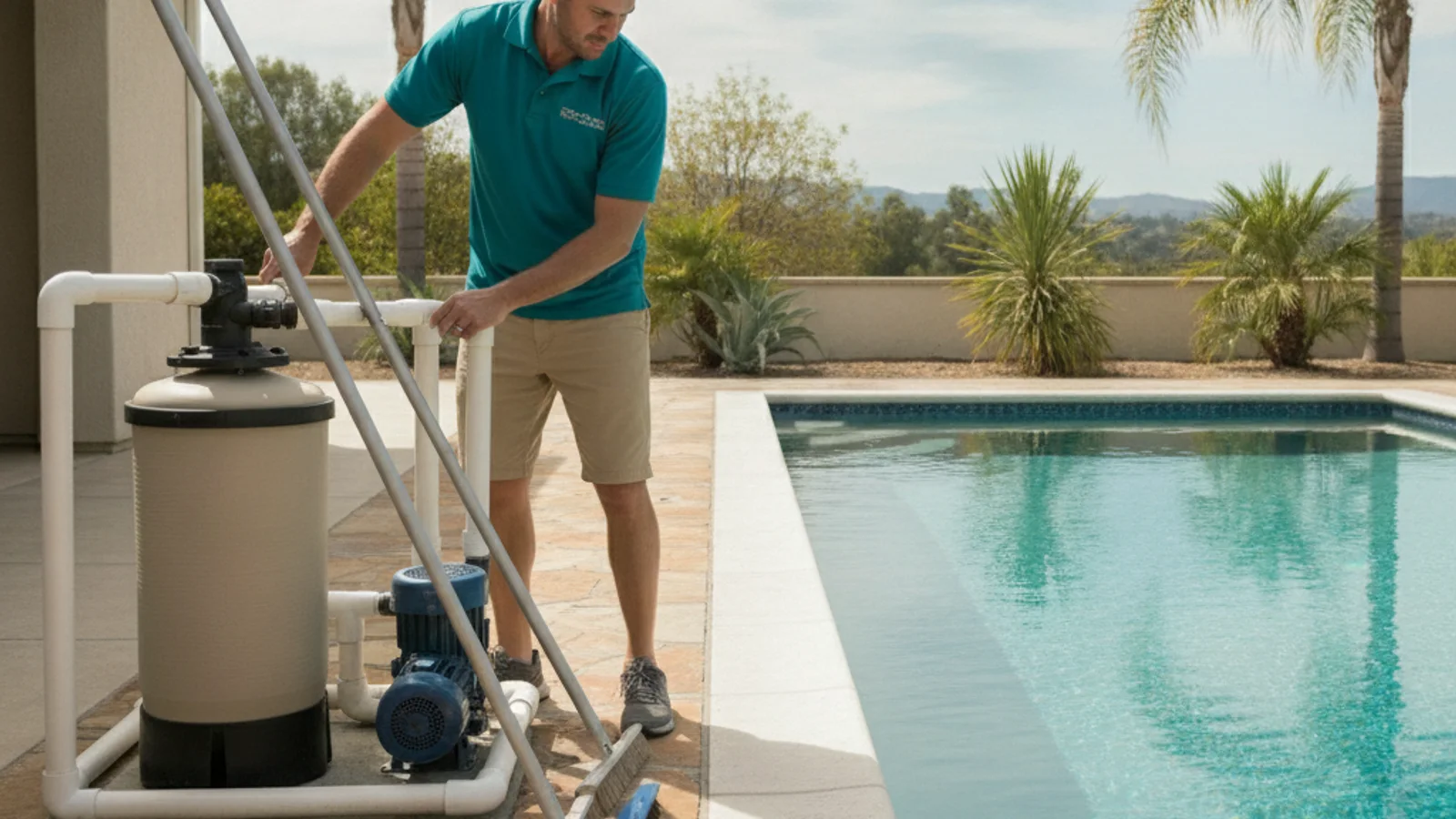
Pool coping options in San Diego generally fall into five materials: travertine, flagstone, precast concrete, brick, and cantilevered concrete, ranging from about $18 to $55 per linear foot installed. Travertine is the most requested upgrade for its cool-to-the-touch surface and light color, while precast concrete remains the budget standard for straightforward pool shapes. The right choice usually comes down to how the pool deck already looks, how much heat the material holds in direct sun, and what a homeowner is willing to spend per foot around the entire perimeter.
Coping isn’t a cosmetic afterthought. It’s the transition piece between the pool shell and the deck, and it takes the brunt of foot traffic, sun exposure, and splashed pool chemicals every single day the pool is in use. San Diego pools see roughly 260 clear days a year, which means coping here bakes in direct sun far more than in cloudier climates, and that heat exposure is one of the biggest factors in choosing a material.
What is pool coping made of?
Pool coping is made from one of five common materials: natural stone (travertine or flagstone), precast concrete, brick, or cast-in-place cantilevered concrete. Each sits on top of the bond beam, the reinforced concrete edge that caps the pool shell, and is set with mortar or adhesive depending on the material. The coping overhangs the pool edge slightly, usually by an inch or so, which lets water drip back into the pool instead of running under the tile line. Material choice affects not just looks but how hot the edge gets barefoot, how it handles pool chemicals, and how it ages against San Diego’s UV exposure.
Why is travertine the most popular pool coping option?
Travertine is the most requested coping material because it stays noticeably cooler underfoot than concrete or brick in direct sun, which matters on a 90-degree San Diego afternoon. It’s a natural limestone with a porous surface that reflects heat rather than absorbing it, so bare feet don’t get burned walking from the pool to a sunny deck chair. Travertine also comes in a tumbled or honed finish that reads as high-end without the price of imported marble. Installed cost in San Diego typically runs $35 to $55 per linear foot, higher than concrete but lower than most people expect for a natural stone upgrade.
What does flagstone coping look like and where does it work best?
Flagstone coping uses irregular, naturally shaped stone slabs set with visible mortar joints, giving pools a rustic, organic edge rather than a clean geometric line. It reads best on pools designed to look like a natural water feature, especially ones bordered by boulders, drought-tolerant landscaping, or a freeform shape rather than a rectangular lap pool. Flagstone runs $30 to $50 per linear foot installed, and the irregular cutting adds labor time compared to uniform pavers. It’s a strong match for hillside San Diego properties in areas like Rancho Santa Fe or Poway where the broader landscape already leans natural rather than formal.
Why do budget renovations use precast concrete coping?
Precast concrete coping is the standard budget choice because it comes pre-molded into shapes that fit standard pool radiuses, cutting down on custom stone cutting during installation. It’s manufactured in a range of finishes, from smooth to a stamped stone-look texture, so it doesn’t have to look plain. Installed cost typically runs $18 to $30 per linear foot in San Diego, roughly half of natural stone. The tradeoff is a shorter lifespan, usually 15 to 20 years versus 25-plus for natural stone, and a finish that can fade or chip faster under constant sun exposure.
Is brick a good pool coping material for San Diego?
Brick works well for pools attached to homes with existing brick or traditional architectural details, since it ties the pool visually to the house rather than standing apart from it. It holds up fine under San Diego’s dry heat, though the mortar joints between bricks need resealing more often than a single-slab material like precast concrete. Brick coping runs $25 to $40 per linear foot installed, landing in the middle of the pricing range. It’s a less common request in newer San Diego renovations, where the trend has shifted toward the cleaner lines of travertine or cantilevered concrete.
What is cantilevered concrete coping?
Cantilevered concrete coping is poured as one continuous piece with the surrounding pool deck, so there’s no visible seam or separate stone cap around the edge. It’s the choice for a modern, minimalist look, especially on newer pools built without a raised bond beam edge. Cost runs $20 to $35 per linear foot, similar to precast, but it requires the deck to be poured or replaced at the same time, which isn’t always practical on a coping-only replacement. This option works best paired with a full deck renovation rather than a standalone coping swap.
How much does pool coping replacement cost overall?
Full coping replacement for an average San Diego residential pool, roughly 40 to 50 linear feet around the perimeter, typically runs $1,500 to $2,500 for precast concrete and $2,000 to $2,800 for natural stone like travertine. Larger pools, freeform shapes with more cutting, or pools that need bond beam repair underneath the old coping will run above these ranges. A licensed pool repair pro can give an exact number once they see how much of the bond beam is exposed after the old coping comes off, since hidden damage is common on pools over 15 years old.
Should coping match the pool tile or the deck?
Coping generally reads best when it complements the deck material rather than matching it exactly, since an identical material on both surfaces can make the pool edge disappear visually and create a tripping hazard for swimmers who can’t see where the deck ends and the coping begins. A common approach in San Diego pairs light travertine coping with a contrasting paver or stamped concrete deck, keeping a visible sight line at the pool’s edge. Tile below the coping is a separate decision and typically gets chosen for color coordination rather than matched to the coping stone itself.
Coping condition is easy to overlook until it’s cracking, staining, or coming loose from the bond beam, and by then it’s usually not a standalone fix. A pool that’s due for resurfacing is the most efficient time to address coping too, since the pool is already drained and the bond beam is already exposed for inspection. Homeowners noticing water loss alongside coping cracks should rule out a structural issue with pool leak detection before any new coping goes down, since sealing coping over an active leak just hides the problem. For pools where coping damage is isolated and the rest of the shell is sound, a general pool repair evaluation can confirm whether a full replacement or a targeted patch is the right call.
Frequently asked questions
What is pool coping and why does it matter?
Pool coping is the cap of stone, concrete, or brick that runs along the pool’s edge, covering the bond beam and separating the water shell from the deck. It matters because it’s the surface swimmers grip getting in and out, and it takes more sun, chemical splash, and foot traffic than almost any other part of the pool. Failed coping leads to water intrusion behind the shell, so it’s a structural component as much as a design one.
What’s the most affordable pool coping material?
Precast concrete coping is the most affordable option, typically running $18 to $30 per linear foot installed in San Diego. It comes in pre-cast pavers shaped to fit standard pool radiuses, so labor time is lower than cut-stone options. It won’t match the texture of natural stone, but paint-grade concrete coping holds up fine under San Diego’s sun with basic sealing every few years.
Does pool coping need to be replaced when a pool is resurfaced?
Not automatically, but resurfacing is the most practical time to check it. Coping that’s cracked, hollow-sounding when tapped, or separating from the bond beam should get replaced while the pool is already drained, since redoing it later means draining the pool again. A resurfacing specialist in our network will usually flag coping condition during the same inspection.
Can cracked pool coping cause a leak?
Yes. Coping sits directly over the bond beam and the top of the pool shell, so a crack that runs through to the mortar bed lets water seep behind the tile and into the deck base. Over time that erodes the soil under the coping, causing it to shift or sink unevenly. A pool repair pro should inspect any coping crack wider than a hairline before it’s just patched over.
How long does pool coping last?
Precast concrete coping typically lasts 15 to 20 years, natural stone like travertine or flagstone often lasts 25 years or more, and brick coping sits in between at roughly 20 years, depending on mortar quality and how well the pool deck drains. San Diego’s dry climate is easier on coping than freeze-thaw regions, but chlorine splash and pool salt still wear down softer stones and grout lines faster than a shaded, low-traffic edge would.
Weighing pool coping options for a repair or a full renovation? Refresh Pool Pros connects San Diego homeowners with vetted, licensed pool repair specialists who can inspect the bond beam and recommend the right material for the budget. Homeowners in the San Diego area can call (858) 400-4598 for a coping repair or renovation quote.
Frequently asked questions
What is pool coping and why does it matter?
Pool coping is the cap of stone, concrete, or brick that runs along the pool's edge, covering the bond beam and separating the water shell from the deck. It matters because it's the surface swimmers grip getting in and out, and it takes more sun, chemical splash, and foot traffic than almost any other part of the pool. Failed coping leads to water intrusion behind the shell, so it's a structural component as much as a design one.
What's the most affordable pool coping material?
Precast concrete coping is the most affordable option, typically running $18 to $30 per linear foot installed in San Diego. It comes in pre-cast pavers shaped to fit standard pool radiuses, so labor time is lower than cut-stone options. It won't match the texture of natural stone, but paint-grade concrete coping holds up fine under San Diego's sun with basic sealing every few years.
Does pool coping need to be replaced when a pool is resurfaced?
Not automatically, but resurfacing is the most practical time to check it. Coping that's cracked, hollow-sounding when tapped, or separating from the bond beam should get replaced while the pool is already drained, since redoing it later means draining the pool again. A resurfacing specialist in our network will usually flag coping condition during the same inspection.
Can cracked pool coping cause a leak?
Yes. Coping sits directly over the bond beam and the top of the pool shell, so a crack that runs through to the mortar bed lets water seep behind the tile and into the deck base. Over time that erodes the soil under the coping, causing it to shift or sink unevenly. A pool repair pro should inspect any coping crack wider than a hairline before it's just patched over.
How long does pool coping last?
Precast concrete coping typically lasts 15 to 20 years, natural stone like travertine or flagstone often lasts 25 years or more, and brick coping sits in between at roughly 20 years, depending on mortar quality and how well the pool deck drains. San Diego's dry climate is easier on coping than freeze-thaw regions, but chlorine splash and pool salt still wear down softer stones and grout lines faster than a shaded, low-traffic edge would.
Need professional help in San Diego County?
Refresh Pool Pros provides every service in this post. Call for a free quote.