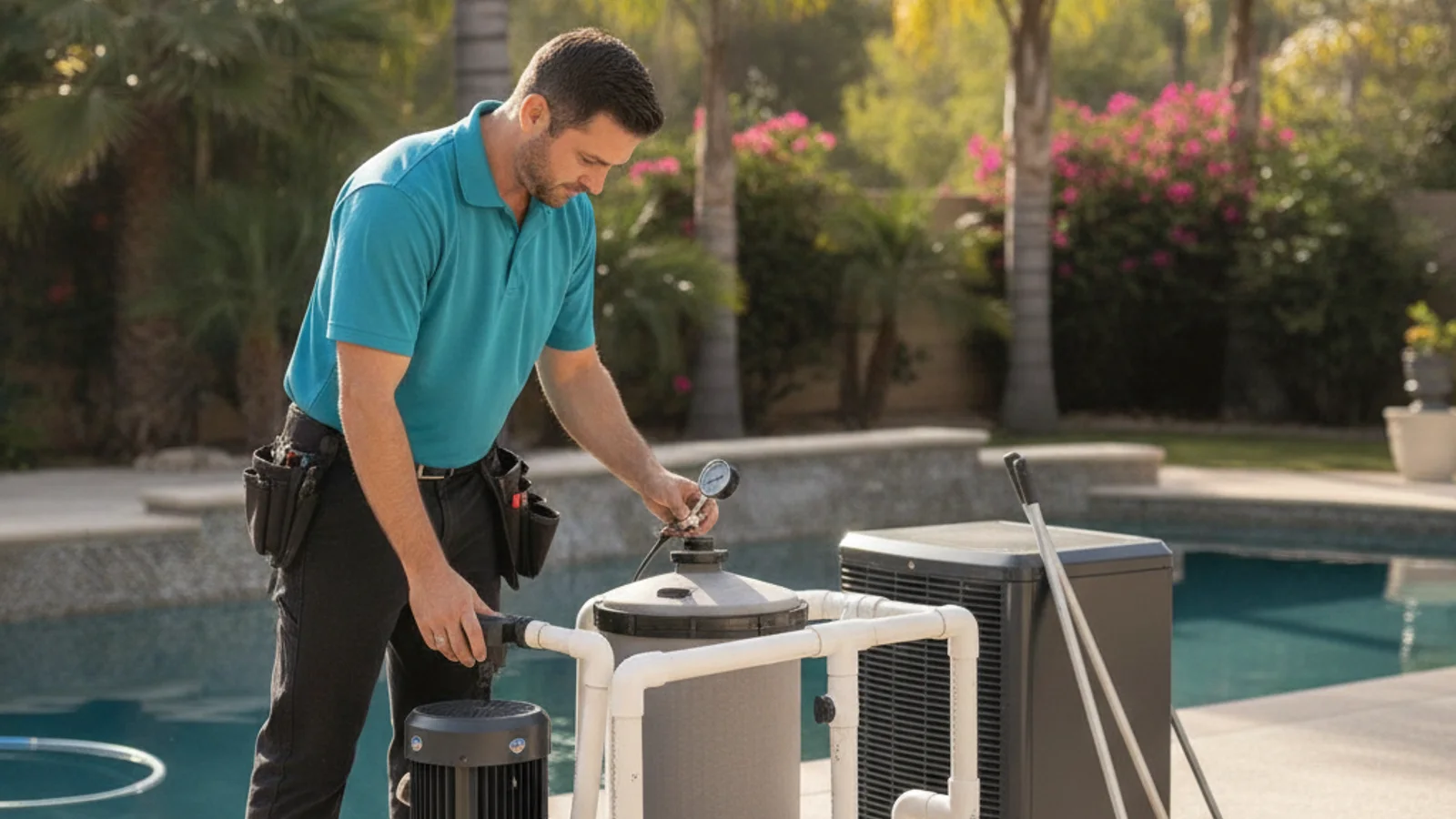
The pool equipment upgrades worth paying for in San Diego are the ones that either meet a state efficiency requirement or prevent a bigger failure down the line: a variable-speed pump, a correctly sized filter, and in some cases a salt cell. A full pad upgrade (pump, filter, and heater together) typically runs $4,000 to $9,000 installed, while single-component swaps run $700 to $3,000 depending on the part. The equipment not worth touching yet is anything under warranty and running fine, no matter how old the pool itself is.
What pool equipment is worth upgrading in San Diego?
The equipment worth upgrading first is whatever is closest to failure or costing the most in wasted energy, and for most San Diego pools built before 2015 that’s the pump. Pre-2010 single-speed pumps run at full power around the clock and account for a large share of a pool’s electric bill. California’s Title 20 mandate already requires variable-speed pumps on new installs, so any pump replacement today comes standard with the efficiency upgrade built in. Filters and heaters are worth evaluating next, but usually only once they show a specific symptom (cracked housing, short-cycling, rust at the base) rather than on a fixed replacement schedule.
Is a variable-speed pump upgrade worth the cost in San Diego?
A variable-speed pump upgrade is worth it for nearly every San Diego pool still running a single-speed motor, since the energy savings alone often cover the price gap within two to four years. Single-speed pumps run at one fixed, high RPM whenever they’re on, while variable-speed models ramp down for routine filtration and only spike to full speed for vacuuming or spa jets. On a pool running 8 hours a day, that difference regularly cuts pump electricity use by 50% to 80%. Beyond the energy math, variable-speed pumps also run quieter, which matters more in denser neighborhoods like North Park or Kensington where equipment pads sit close to a neighbor’s fence.
Should I upgrade equipment during a leak repair or resurfacing job?
Bundling an equipment upgrade into a leak repair or resurfacing project is almost always cheaper than doing it as a separate job later, since the pad may already be open and labor is already committed to the site visit. A pool getting pool leak detection work near the equipment pad, for example, often has plumbing exposed that makes a pump or valve swap faster and less disruptive than it would be on its own. The same logic applies to a full resurfacing project, since the pool is already drained and the timeline already accounts for the pool being offline. Homeowners who wait and do the equipment upgrade six months later end up paying for a second mobilization and, in the resurfacing case, a second period without pool access.
Is a salt cell upgrade worth it for an aging pool?
A salt water conversion is worth it for most homeowners tired of buying and storing chlorine, and it doesn’t require replacing an existing pump or filter in most setups. The conversion itself runs $1,500 to $2,500 installed and adds a salt cell that generates chlorine from dissolved salt in the water, which cuts down on manual dosing and tends to feel gentler on skin and eyes. The tradeoff is that salt cells wear out and need replacement every 3 to 7 years depending on usage, and salt water is more corrosive to certain metal pool fixtures and deck hardware than fresh chlorine, so older pools with metal coping or older heaters should get a quick compatibility check first. A specialist handling salt water conversion can confirm the existing equipment pad will tolerate the switch before any work starts.
How much does a full pool equipment pad upgrade cost in San Diego?
A full pad upgrade, replacing the pump, filter, and heater together, typically runs $4,000 to $9,000 installed in San Diego, with the spread depending mostly on equipment tier and whether the job also needs new electrical or gas line work. Pump-only swaps run $1,200 to $2,200. Filter replacements run $800 to $2,000 depending on cartridge versus DE. Heater swaps run $2,500 to $5,500 for gas units, with heat pump models often landing higher upfront but cheaper to run over time in San Diego’s mild year-round climate. Homeowners on a tighter budget can stage the upgrade: pump first for the fastest payback, then filter, then heater as it ages out.
What pool equipment isn’t worth upgrading yet?
Equipment that’s under 5 years old, still under manufacturer warranty, and running without symptoms usually isn’t worth upgrading regardless of how outdated the rest of the pool looks. A newer single-speed pump on a pool that only runs a few hours a day, for instance, may not pay back a variable-speed swap fast enough to justify the cost yet. The same goes for automation systems. A working manual timer doesn’t need to become a smart controller just because the technology exists; that upgrade makes more sense once a homeowner is already adding pool equipment for another reason and the incremental cost of automation is small.
When does automation make sense as an equipment upgrade?
Automation makes the most sense as an add-on to an equipment upgrade already happening for another reason, rather than as a standalone project on otherwise working gear. Pairing a new variable-speed pump, heater, and salt cell with a single app-based controller lets a homeowner adjust schedules remotely and catch problems (like a heater that won’t fire or a pump that’s cycling oddly) before they become a bigger repair. On a pool where the pump, filter, and heater are all different ages and brands, a licensed pool repair pro can usually recommend a universal controller rather than requiring a full rip-and-replace just to get automation working.
Frequently asked questions
What’s the most worthwhile pool equipment upgrade in San Diego?
A variable-speed pump is usually the highest-return upgrade for San Diego pool owners, since it’s required by California’s Title 20 standard on any new pump install and typically cuts pump-related electricity use by 50% to 80% over an old single-speed motor. Most homeowners see the price difference recovered in energy savings within two to four years, depending on how often the pool runs.
Should I repair or replace an old pool heater?
A heater older than 10 years with a cracked heat exchanger or repeated ignition failures is usually a replace, since parts for older models get harder to source and a new heater runs more efficiently. A heater under 7 years old with a single failed part, like an ignitor or thermostat, is almost always cheaper to repair than replace.
Is it worth upgrading pool equipment during a leak repair?
Yes, if the pad is being opened up anyway for a leak repair, it’s the cheapest time to also swap an aging pump, filter, or valve, since labor is already committed and the pool may already be partially drained. Bundling an equipment upgrade into a leak repair visit usually saves a separate service call and its own trip charge.
How much does a full pool equipment pad upgrade cost in San Diego?
A full pad upgrade, meaning a new pump, filter, and heater installed together, typically runs $4,000 to $9,000 in San Diego depending on equipment tier and whether new plumbing or electrical work is needed. Single-component upgrades run far less, generally $700 to $3,000 per part installed.
Does upgrading to a salt system count as an equipment upgrade?
Yes, a salt water conversion is one of the more common equipment upgrades San Diego homeowners request, since it replaces manual chlorine dosing with a salt cell that generates chlorine automatically. The conversion itself runs $1,500 to $2,500 installed and doesn’t require replacing the existing pump or filter in most cases.
Once the new equipment is in and dialed in, keeping it running well comes down to routine care more than any single repair. We handle the equipment side, upgrades, repairs, and diagnosing what’s actually failing, but for ongoing weekly cleaning and maintenance once your pool is back in shape, we recommend Splash Pro Pools.
Not sure whether your pool needs a full pad upgrade or just one worn-out part? Call (858) 400-4598 and our network will connect you with a pool repair specialist serving San Diego who can look at the equipment in person and tell you what’s actually worth replacing.
Frequently asked questions
What's the most worthwhile pool equipment upgrade in San Diego?
A variable-speed pump is usually the highest-return upgrade for San Diego pool owners, since it's required by California's Title 20 standard on any new pump install and typically cuts pump-related electricity use by 50% to 80% over an old single-speed motor. Most homeowners see the price difference recovered in energy savings within two to four years, depending on how often the pool runs.
Should I repair or replace an old pool heater?
A heater older than 10 years with a cracked heat exchanger or repeated ignition failures is usually a replace, since parts for older models get harder to source and a new heater runs more efficiently. A heater under 7 years old with a single failed part, like an ignitor or thermostat, is almost always cheaper to repair than replace.
Is it worth upgrading pool equipment during a leak repair?
Yes, if the pad is being opened up anyway for a leak repair, it's the cheapest time to also swap an aging pump, filter, or valve, since labor is already committed and the pool may already be partially drained. Bundling an equipment upgrade into a leak repair visit usually saves a separate service call and its own trip charge.
How much does a full pool equipment pad upgrade cost in San Diego?
A full pad upgrade, meaning a new pump, filter, and heater installed together, typically runs $4,000 to $9,000 in San Diego depending on equipment tier and whether new plumbing or electrical work is needed. Single-component upgrades run far less, generally $700 to $3,000 per part installed.
Does upgrading to a salt system count as an equipment upgrade?
Yes, a salt water conversion is one of the more common equipment upgrades San Diego homeowners request, since it replaces manual chlorine dosing with a salt cell that generates chlorine automatically. The conversion itself runs $1,500 to $2,500 installed and doesn't require replacing the existing pump or filter in most cases.
Need professional help in San Diego County?
Refresh Pool Pros provides every service in this post. Call for a free quote.