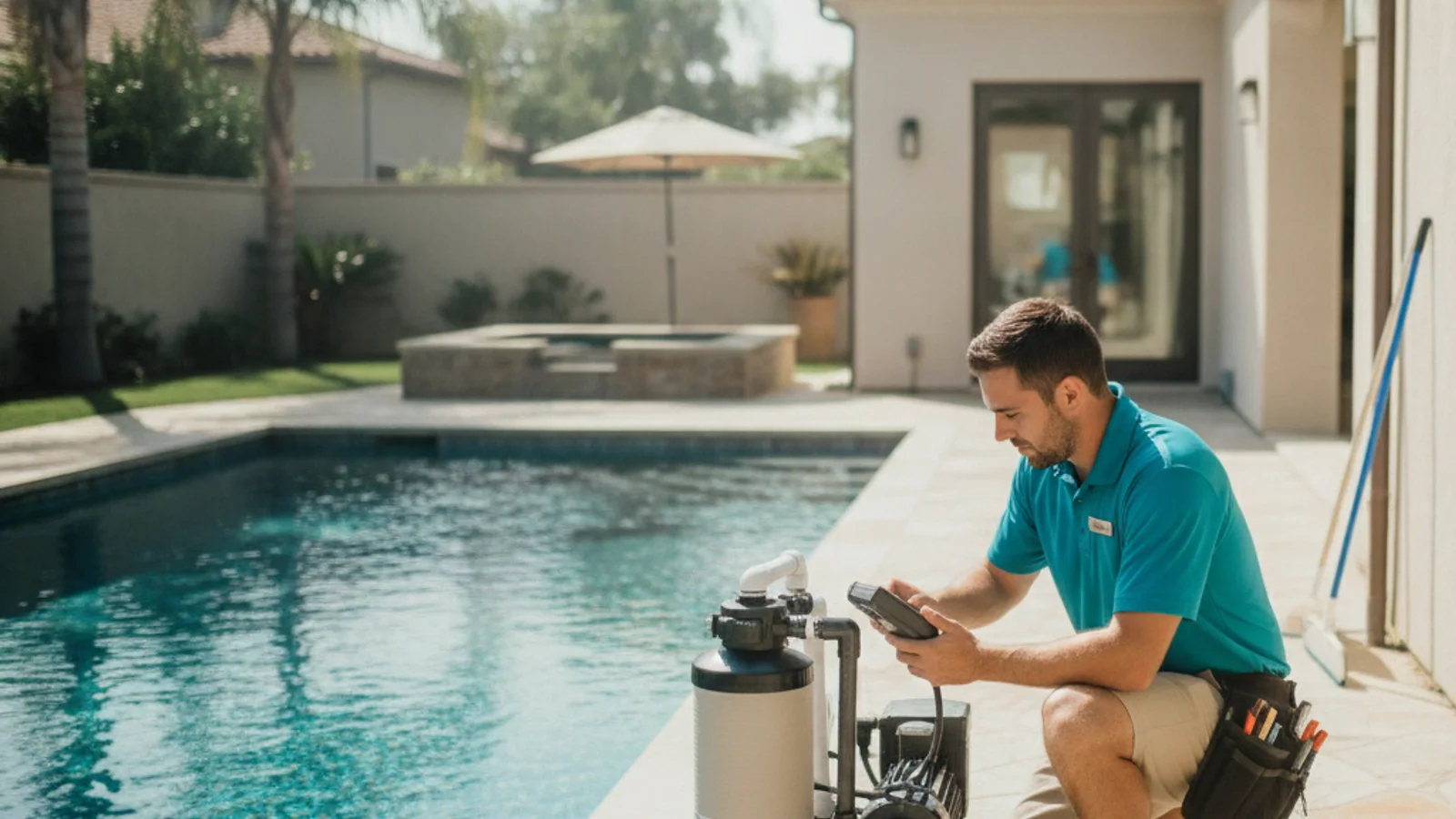
A salt water pool conversion in San Diego costs $1,500 to $2,800 installed, covering the salt chlorine generator cell, control box, wiring, initial pool salt, and labor. Pool size, the age of the existing equipment pad, and how much electrical work the job needs are what push a quote toward the higher end of that range.
Refresh Pool Pros connects San Diego homeowners with vetted pool repair specialists who handle salt water conversions from start to finish. This guide breaks down exactly where that money goes so you can spot a fair quote before a pro shows up at your equipment pad.
How much does a salt water pool conversion cost in San Diego?
A typical residential conversion runs $1,500 to $2,800 for a pool in the 15,000 to 25,000 gallon range, the size of most single-family backyard pools across the county. Smaller plunge pools and spas can convert for closer to $1,200, while larger pools over 30,000 gallons or pools that also need equipment pad electrical work often land at $3,000 or more. The number quoted should reflect your actual pool volume, not a flat rate, since an undersized cell on a large pool won’t keep up with chlorine demand.
What’s actually included in that conversion price?
A complete conversion quote covers four things: the salt chlorine generator cell itself, the control box that regulates cell output and monitors salt levels, the wiring and plumbing tie-in at the equipment pad, and the first batch of pool-grade salt needed to bring the water to the correct concentration. Labor for a straightforward install typically runs $300 to $600 of that total, with the cell and control box making up most of the remaining cost. Any quote that doesn’t break these line items out separately is harder to compare against a competing bid.
What drives the price up or down?
Pool volume is the single biggest factor, since a larger pool needs a higher-output cell that costs more before labor even enters the picture. The condition of your existing equipment pad matters almost as much. A pad with modern wiring and a nearby electrical panel takes less time to tie into than an older pad that needs a dedicated circuit run from a panel on the other side of the yard. Pools with attached spas or water features sometimes need a second, smaller decision about whether that feature shares the main cell or gets its own, which changes the scope of the job.
Are there cheaper and more expensive salt system options?
Yes. Basic salt cell and control box combinations start around $600 to $900 for the equipment alone, while higher-output cells built for larger pools or systems with added features like automated pH dosing run $1,000 to $1,800 for equipment before labor. Mid-range systems from established manufacturers cover most San Diego backyard pools without needing the premium tier. Going with the cheapest available cell can mean replacing it sooner, so the equipment tier is one place where paying a bit more up front often saves money over the system’s life.
Does San Diego’s water quality affect conversion cost?
San Diego runs hard, mineral-heavy water, which doesn’t change the upfront conversion cost but does affect how often the cell needs cleaning and how soon it needs replacing. Calcium buildup on cell plates reduces chlorine output over time, and pools that don’t stay on top of hardness testing tend to see cell life on the shorter end of the 3 to 7 year range. A specialist doing the install should test your water hardness as part of the job and flag whether you’ll need more frequent maintenance than average.
What ongoing costs come after the conversion?
Monthly costs drop after conversion since a bag or two of pool salt per season costs far less than a steady supply of liquid chlorine or tablets, but the system isn’t free to run long term. Budget for a salt cell replacement every 3 to 7 years at $600 to $1,200, along with occasional acid washes to clear calcium scale off the cell plates. Older metal pool fixtures, ladders, and handrails not rated for salt exposure may also need replacing within the first couple of years, which is a cost worth asking about before converting rather than discovering after corrosion sets in.
Is it worth converting an older pool with original fixtures?
It depends on the condition of the plaster and metal fixtures more than the age of the pool itself. A pool with aging plaster that’s already chalking or etched is a weaker candidate for conversion until the surface gets addressed, since salt water chemistry can accelerate wear on a surface that’s already past its prime. Original metal fixtures from the 1970s through 1990s common across San Diego County pool stock often aren’t rated for salt exposure and should get swapped as part of the conversion, adding to the upfront cost but avoiding pitting and corrosion later.
Do I need a permit for a salt water conversion in San Diego?
Most straightforward conversions that tie into existing wiring don’t require a permit in San Diego jurisdictions. If the job needs a new dedicated circuit, a larger breaker, or any modification to the equipment pad’s electrical setup, an electrical permit is required and a licensed pro pulls it as part of the job. It’s worth confirming permit needs with your installer before work starts rather than after, especially on older properties where the equipment pad hasn’t been touched in decades.
Refresh Pool Pros connects San Diego homeowners with vetted specialists who handle salt water conversion from equipment pad evaluation through final testing. If your pool’s surface needs attention before converting, our network also includes pool resurfacing pros, along with pool equipment technicians for pad upgrades and pool leak detection specialists if you’re not sure your plumbing can support a new system. Homeowners across San Diego and the surrounding county can get matched with a pro who already knows the local equipment eras and code requirements.
Frequently asked questions
How much does it cost to convert a pool to salt water in San Diego?
Most San Diego homeowners pay $1,500 to $2,800 for a full salt water conversion, which covers the salt cell, control box, wiring, initial pool salt, and labor. Larger pools, older equipment pads, and jobs that need extra electrical work land toward the top of that range or slightly above it.
What’s included in a salt water conversion quote?
A complete quote covers the salt chlorine generator cell, the control box that regulates output, wiring from the box into the existing equipment pad, the first batch of pool-grade salt, and the labor to install and test the system. Anything beyond that, like fixture upgrades or plumbing rework, should show up as a separate line item, not buried in the base price.
Is a salt water conversion a DIY project?
Technically some kits exist for handy homeowners, but a professional install is worth the cost for most San Diego pools because the cell has to be sized correctly for pool volume and the electrical connection has to be done safely at the equipment pad. A miscalculated cell size either underproduces chlorine or burns out early, which costs more than the labor saved.
How long does it take to convert a pool to salt water?
A standard conversion takes one day for most residential pools once a technician confirms the equipment pad can support the new cell and control box. Jobs that need electrical upgrades, plumbing modifications, or fixture replacement for saltwater compatibility can stretch to two or three days.
Does converting to salt water pay for itself over time?
The $1,500 to $2,800 install cost is typically offset within two to four years through lower spending on jugs of liquid chlorine or tablets, though the exact payback depends on pool size and how much chlorine you were buying before. Factor in a salt cell replacement every 3 to 7 years, which resets part of that savings clock.
Can any pool in San Diego be converted to salt water?
Most gunite, plaster, and vinyl-liner pools convert without major issues, but pools with older unprotected metal fixtures, already-etched plaster, or undersized equipment pads need a professional evaluation first. A specialist checks the equipment pad and surface condition before quoting a firm number, since those factors change what the job actually requires.
Thinking about converting to salt water, or want a firm number for your specific pool? Call Refresh Pool Pros at (858) 400-4598 and we’ll connect you with a licensed conversion specialist for a straight quote.
Frequently asked questions
How much does it cost to convert a pool to salt water in San Diego?
Most San Diego homeowners pay $1,500 to $2,800 for a full salt water conversion, which covers the salt cell, control box, wiring, initial pool salt, and labor. Larger pools, older equipment pads, and jobs that need extra electrical work land toward the top of that range or slightly above it.
What's included in a salt water conversion quote?
A complete quote covers the salt chlorine generator cell, the control box that regulates output, wiring from the box into the existing equipment pad, the first batch of pool-grade salt, and the labor to install and test the system. Anything beyond that, like fixture upgrades or plumbing rework, should show up as a separate line item, not buried in the base price.
Is a salt water conversion a DIY project?
Technically some kits exist for handy homeowners, but a professional install is worth the cost for most San Diego pools because the cell has to be sized correctly for pool volume and the electrical connection has to be done safely at the equipment pad. A miscalculated cell size either underproduces chlorine or burns out early, which costs more than the labor saved.
How long does it take to convert a pool to salt water?
A standard conversion takes one day for most residential pools once a technician confirms the equipment pad can support the new cell and control box. Jobs that need electrical upgrades, plumbing modifications, or fixture replacement for saltwater compatibility can stretch to two or three days.
Does converting to salt water pay for itself over time?
The $1,500 to $2,800 install cost is typically offset within two to four years through lower spending on jugs of liquid chlorine or tablets, though the exact payback depends on pool size and how much chlorine you were buying before. Factor in a salt cell replacement every 3 to 7 years, which resets part of that savings clock.
Can any pool in San Diego be converted to salt water?
Most gunite, plaster, and vinyl-liner pools convert without major issues, but pools with older unprotected metal fixtures, already-etched plaster, or undersized equipment pads need a professional evaluation first. A specialist checks the equipment pad and surface condition before quoting a firm number, since those factors change what the job actually requires.
Need professional help in San Diego County?
Refresh Pool Pros provides every service in this post. Call for a free quote.